Make technical substance visible, identify risks early and build due-diligence readiness from supportable evidence rather than pitch assertions.
Short answer: Before a financing or M&A review, startups can determine which technical claims are already supported, which evidence is missing and which risks still require explanation. Readiness means transparency and reproducibility, not perfection.
Make technical maturity reviewable before external diligence begins
Startups often need to ship and learn quickly. Simplified solutions or technical debt can be consciously accepted. The problem arises when key assumptions, builds, tests, data flows or architecture decisions can no longer be traced later.
A technical readiness review therefore does not make everything “perfect”. It separates conscious trade-offs from unknown risks and helps structure existing evidence for investors, partners or customers.
Typical reasons for an assignment
before a financing round, M&A process or external technical due diligence
when repository, build, architecture, tests, releases and operational evidence need to be prepared for a data room
when technical debt or historical architecture decisions exist and need traceable classification
when versioning, data provenance, evaluation or operating boundaries for AI/data products are not yet reviewable
Typical technical questions
Can the current product state be reproduced from the repository and build process?
Which technical debts were consciously accepted and which merely accumulated historically?
Are architecture decisions, dependencies and critical operating assumptions documented?
Which test, release and security evidence would withstand external due diligence?
Are data and AI components versioned, traceable and documented with their statement boundaries?
Examination scope: The review targets technical traceability and risk transparency. It does not promise financeability, scalability success, market acceptance or a positive investor decision.
From product story to due-diligence-ready technical evidence
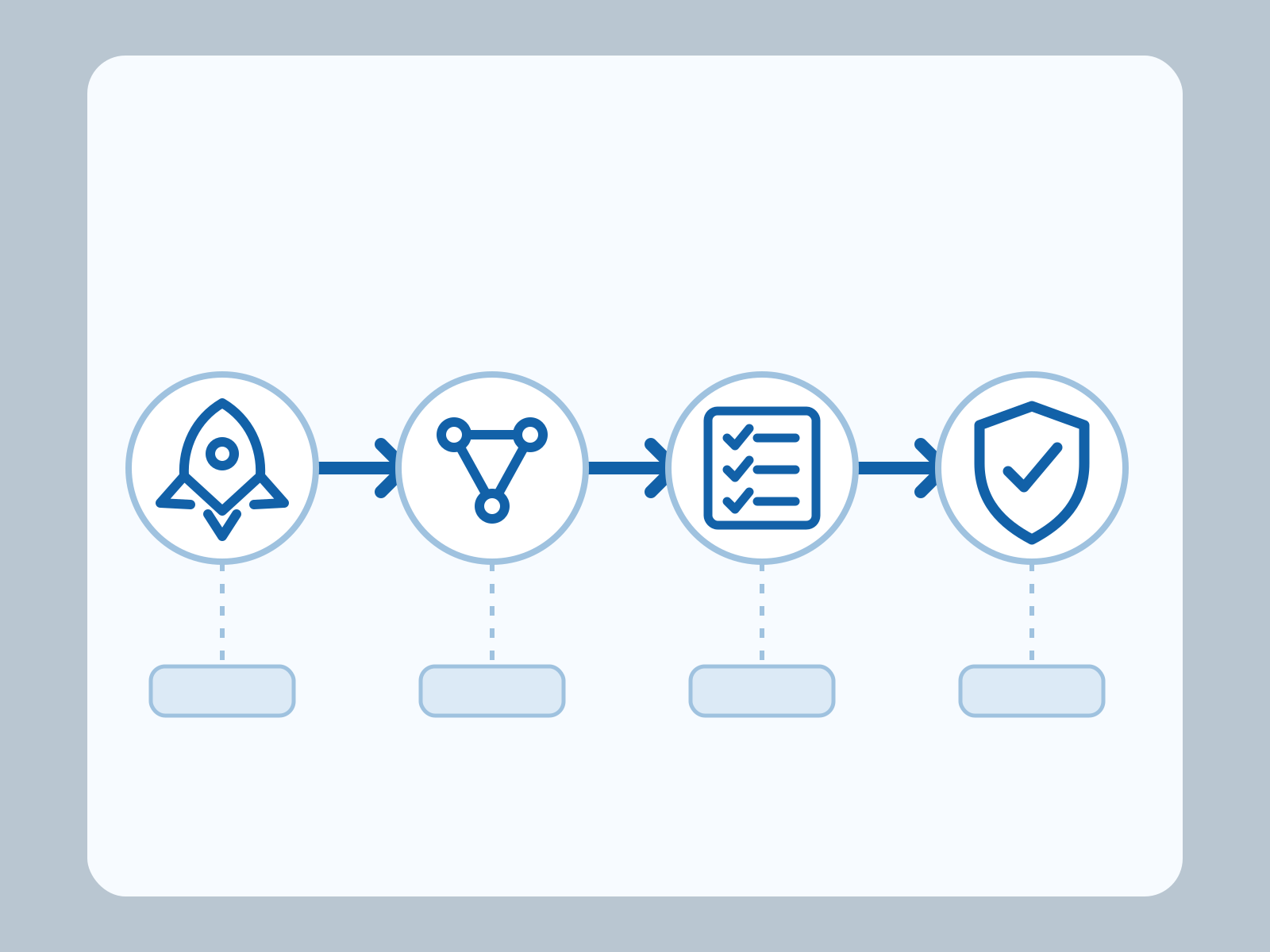
Startup readiness chain
From product story to due-diligence-ready technical evidence
1Define the review objectiveDelimit product, system states, critical assumptions and external review objectives.
Trace provenance and transformation in data-driven products.
Statement and decision boundary: The readiness review describes technical traceability, risks and evidence gaps. It guarantees neither financing, customer success, scalability nor regulatory approval and does not replace legal or financial advice.
Frequently asked questions
Must a startup eliminate all technical debt before due diligence?
No. Technical debt can be deliberate and economically sensible. What matters is that its cause, impact and future cost are traceable and that critical risks are not unintentionally hidden.
What matters more for readiness: perfect documentation or reproducible evidence?
Both reinforce each other, but documented claims should be connected to technical artefacts wherever possible. A reproducible build or traceable release path is stronger than a statement that the process works.
Can the readiness review be performed confidentially before a financing round?
The organisational setup is agreed in advance. From a technical perspective, data minimisation applies: only material required for the examination is needed.
Clarify due-diligence readiness before external review
Useful starting information includes the objective and timing of the expected review, a product and architecture overview, and a list of already available technical evidence. Gaps are prioritised by technical relevance, not presentation value.