Examine technical evidentiary questions traceably — with a documented examination basis, methodological counter-checking and a clear separation between technical finding and legal assessment.
Short answer: Courts receive a technically traceable examination of the specifically formulated evidentiary question. System state, examination basis, method, findings and statement boundaries are documented so that the technical reasoning remains reviewable.
Translate technical evidentiary questions into a reviewable examination process
Court questions require technical answers whose reasoning can be followed by third parties. The evidentiary issue, subject of examination, system state, sources and reference criteria are therefore delimited explicitly before evaluation.
The technical examination answers only those technical questions that can be supported by the available evidence. Missing artefacts, conflicting time states or non-reproducible conditions are not replaced by assumptions; they are documented as statement boundaries.
Typical reasons for an assignment
when a technical evidentiary question concerning software, an IT project, data, AI or IT security must be clarified
when versions, builds, logs, hash values or project states must be assigned to a disputed period
when an alleged software defect or technical fault should be reproduced under documented conditions
when existing technical records are contradictory, incomplete or require methodological classification
Typical technical questions
Which software version, build, system or data state is the subject of the evidentiary question?
Can the alleged software defect be reproduced under documented conditions?
Which technical records establish a project, release or acceptance state?
Which evidence chain connects hash values, timestamps, files, logs or repository states with the examined matter?
Which alternative technical explanations remain plausible for the observed finding?
Examination scope: Before accepting an assignment, the evidentiary issue, specialist field, conflicts of interest, examination means and available capacity are checked. Legal evaluation remains with the court.
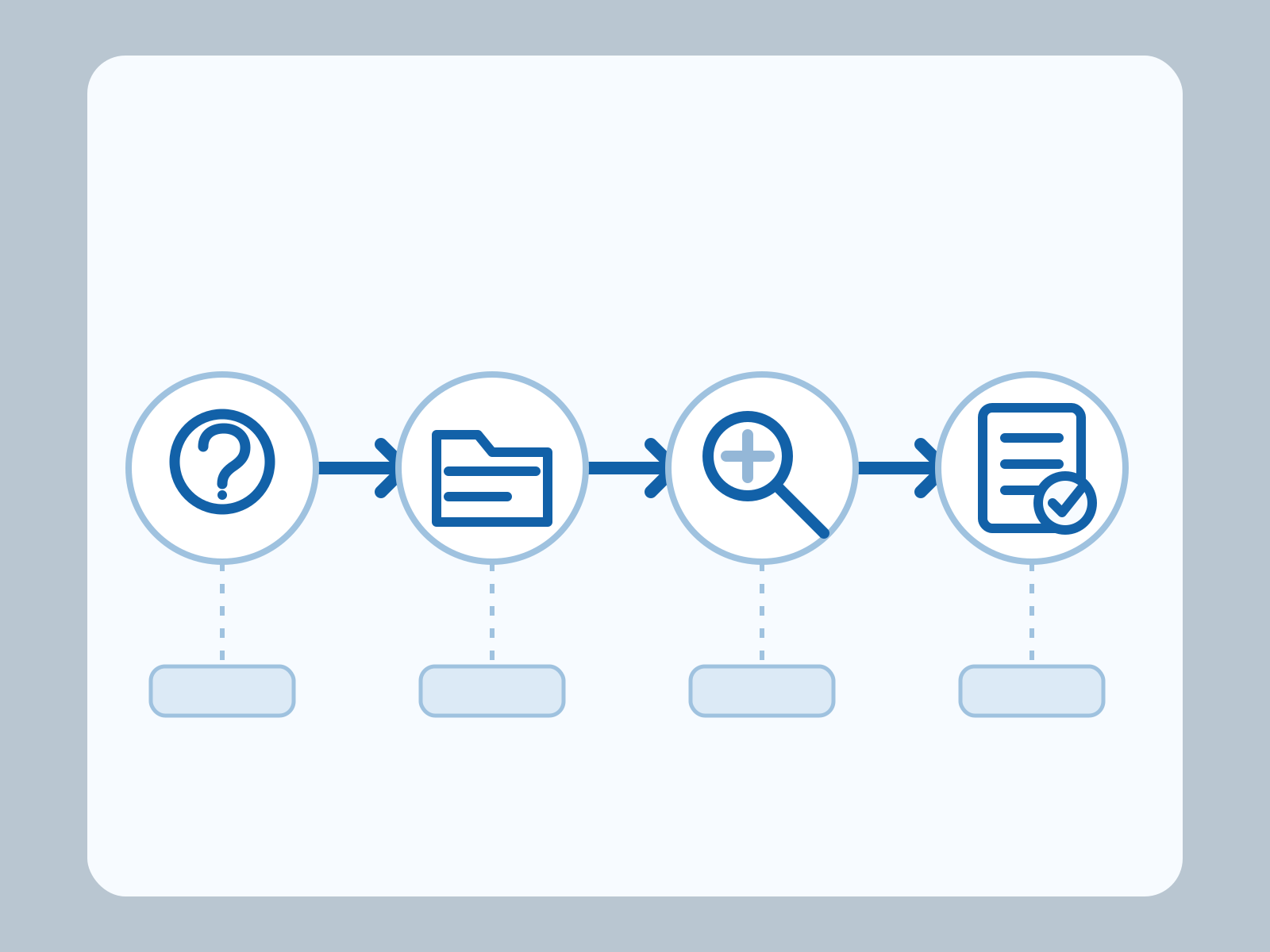
From evidentiary question to a traceable technical expert report
Court examination chain
From evidentiary question to a traceable technical expert report
Actively test alternative technical explanations against the initial hypothesis.
Statement and decision boundary: The expert report describes technical findings and professional conclusions within the assignment. It does not provide legal advice, legal evaluation or a decision on claims or legal consequences.
Frequently asked questions
Can every evidentiary question be examined technically?
No. It must relate to a technically delimitable subject and have a sufficient examination basis. Unclear or purely legal questions must be separated before the technical examination.
Must a technical finding be fully reproducible?
Not in every case. Reproducibility depends on whether relevant data, versions, environments and tools remain available. Missing reproducibility is documented as a limitation.
Does a technical chronology automatically establish causation?
No. Temporal proximity is not causation. Causal conclusions require their own evidence chain and examination of plausible alternative explanations.
Prepare the technical evidentiary question and records
For an initial technical review, the court order or technical question, the relevant period and an overview of the available records are particularly useful. Specialist field, conflicts of interest and examinability are checked before acceptance.