Refine technically complex disputes, classify evidence and test counter-hypotheses — without replacing legal analysis or litigation strategy.
Short answer: Law firms receive an independent technical classification of disputed IT facts, evidence and counter-hypotheses. The examination separates supportable facts from interpretation while legal construction and litigation strategy remain with counsel.
Structure technical disputes so that argument and evidence remain separate
IT disputes often combine contractual narratives, project communication and technical system states. A reliable technical classification therefore starts by determining which assertion is technically examinable and which evidence can support or contradict it.
An independent second opinion can help where source code, versions, project chronologies, logs, data or AI systems require technical assessment. The legal significance remains a separate legal task.
Typical reasons for an assignment
when technical assertions in pleadings or contractual records must be traced back to their actual evidentiary basis
when a privately commissioned or court expert report should be technically reviewed or a second opinion is needed
when source code, Git histories, project chronologies, logs or datasets must be classified for a dispute
when it must first be determined which technical question can actually be examined reliably
Typical technical questions
Is a technical assertion by the opposing party actually supported by the cited artefacts?
Which system version or project state is relevant to the disputed period?
Which counter-hypotheses must be considered for an alleged software or project defect?
Can technical statements in an existing expert report be reproduced or traced to their evidentiary basis?
Which additional records would be required to examine an open technical question reliably?
Examination scope: The technical assessment can structure facts, evidence and professional alternative explanations. Legal interpretation, litigation strategy and counsel's legal evaluation are not part of the technical service.
From party assertion to reviewable technical classification
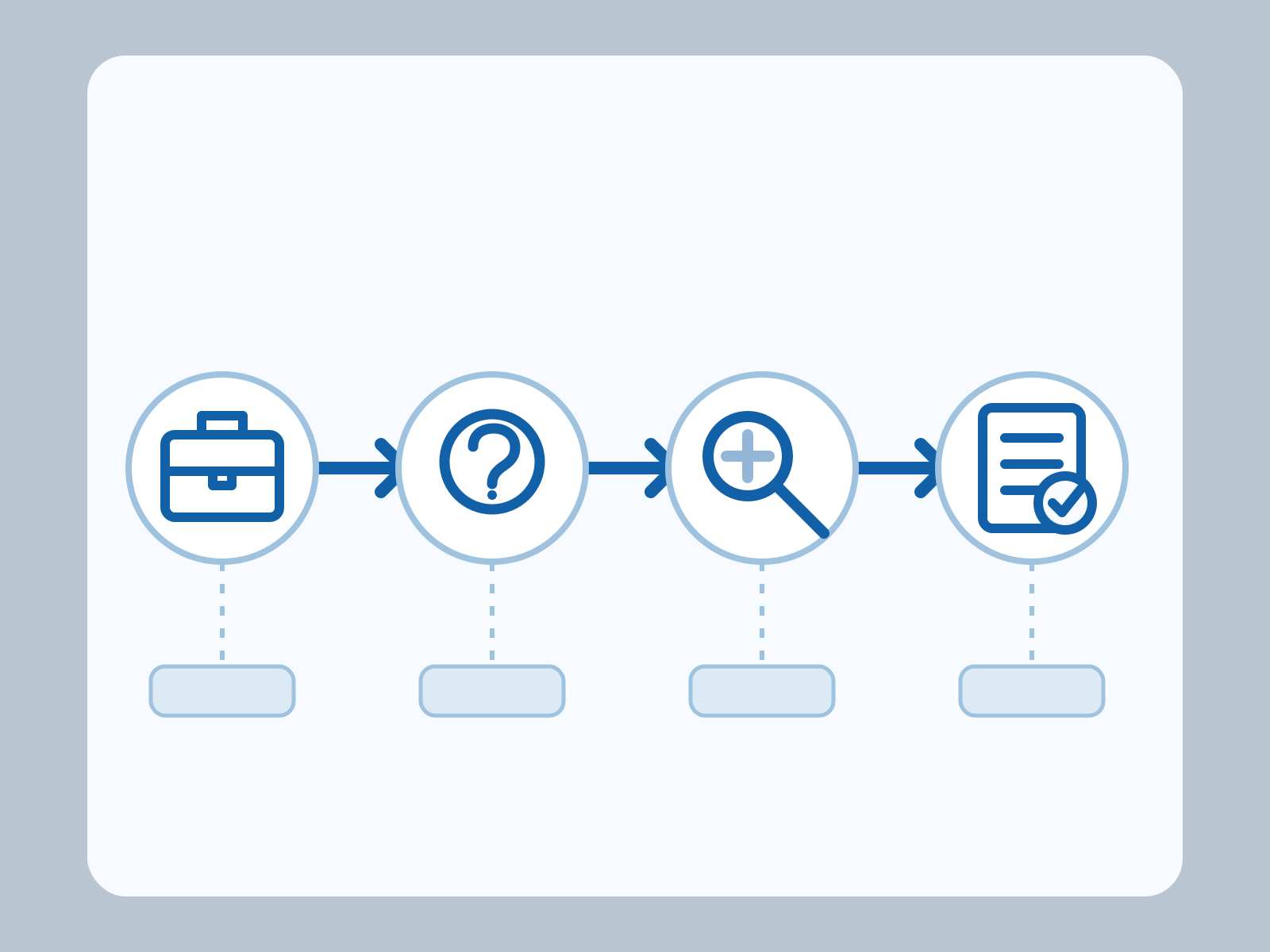
Law-firm examination chain
From party assertion to reviewable technical classification
Compare observed behaviour with a documented technical reference.
Statement and decision boundary: The technical assessment addresses technical facts, evidence and professional alternatives. It does not provide legal advice, contract interpretation or litigation strategy.
Frequently asked questions
Can an existing expert report be reviewed technically?
Yes. The review can examine whether the stated technical conclusions follow from the documented evidence, methods and system state. It does not decide the legal weight of the report.
Can a second opinion be limited to one disputed point?
Yes. A narrowly formulated technical question is often preferable where only one evidentiary or methodological point is disputed.
Does the technical review replace legal advice?
No. Legal interpretation and litigation strategy remain with legal counsel.
Prepare the technical dispute question
For an initial assessment, a short description of the disputed technical assertion, the relevant period and the principal records are usually sufficient. The technical scope can then be delimited without prejudging the legal position.