Websites & Web Applications
A website is not one immutable object. Its observable state can depend on URL, origin, HTTP response, browser execution, client state, backend data and deployment state. The subject of examination must therefore be defined as a time-specific technical state rather than as an abstract domain name.
Short answer
The examination should identify the relevant resources, expected behaviour and observation layer. HTTP response, DOM state, network traffic and backend evidence are separate evidence levels and should not be collapsed into a single statement about “the website”.
A correct result in one browser session does not prove identical behaviour at another point in time or under another origin, cache, account or backend data state. The conclusion is limited to the defined system and evidence boundary.
1. Define the concrete resources and time reference
Start with the URL or set of URLs, the relevant date and the technical question. A later production state cannot silently stand in for an earlier disputed state, and a domain-wide description is often too broad for reproducible testing.
Record whether the question concerns delivered HTTP representations, client-side rendering, authenticated application behaviour, a specific API transaction or a combination of these layers. This prevents evidence from one layer being used to support a conclusion about another.
2. Treat URI, origin and HTTP state as distinct identifiers
A URI identifies a resource reference, while the web origin is relevant to browser security and isolation. Redirects, host names, schemes and ports can therefore materially change the technical context even where the visible page looks similar.
Record status codes, response headers and the representation actually delivered. The HTTP semantics provide a stable basis for describing redirects, success and error responses without inferring the internal reason for a response from the status code alone.
3. Separate delivered source from browser-generated state
HTML delivered by the server and the DOM observed after browser execution are different evidence states. JavaScript may add, remove or transform content after initial delivery, and network requests may populate application data asynchronously.
Capture both levels where the distinction matters. A screenshot can document appearance, but it does not by itself preserve the HTML, DOM mutations, request sequence or response metadata needed to reconstruct the technical path.
4. Define frontend, backend and external-service boundaries
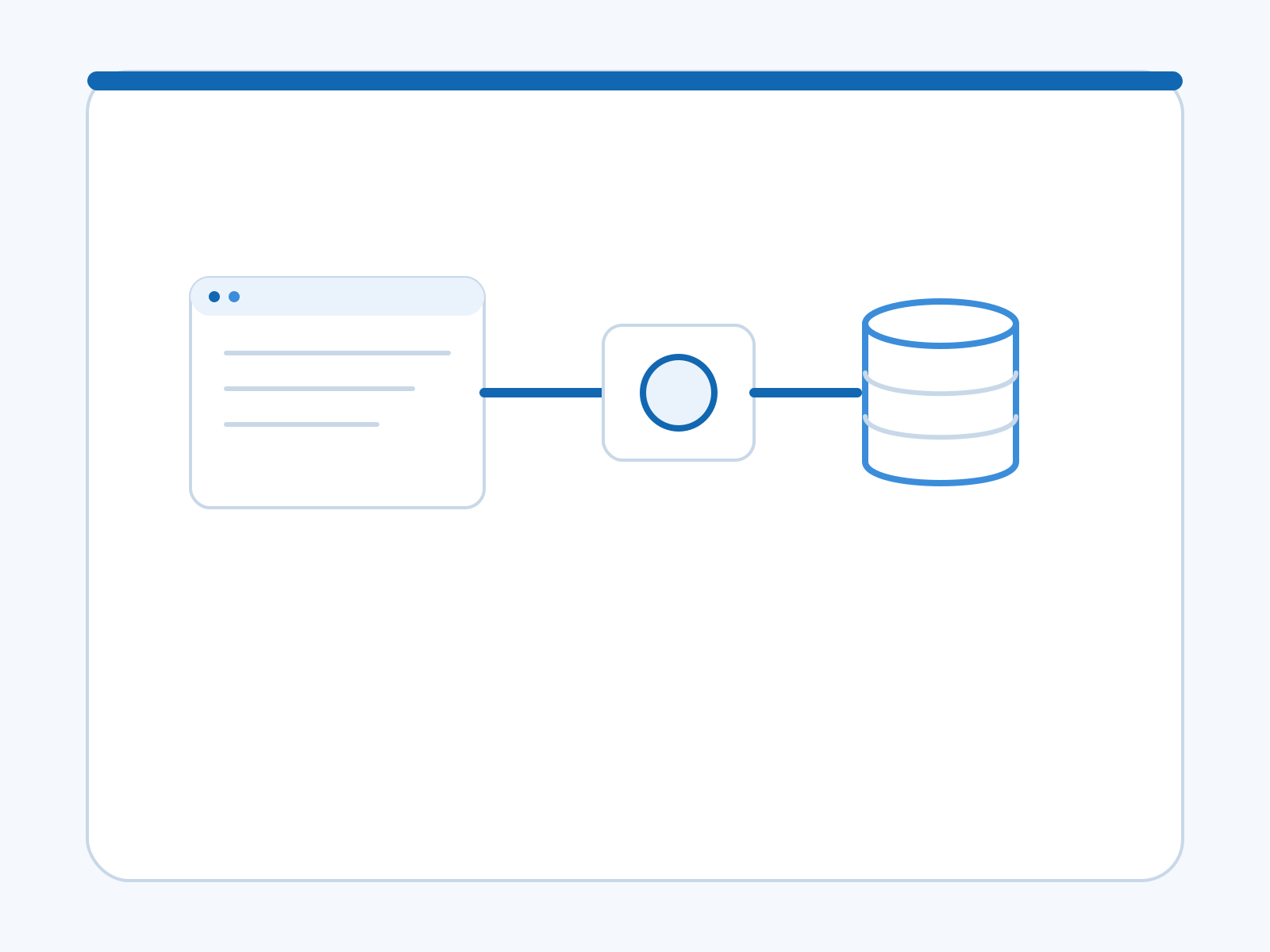
Distributed web applications commonly involve frontend code, API gateways, application services, databases and third-party systems. The presence of a component in an architecture diagram does not make it part of every examination question.
Follow the observable transaction and include only layers for which the evidence supports a technical relationship. Server-side causation requires server-side evidence; a client error alone is insufficient to attribute an internal backend root cause.
5. Preserve state that can affect reproducibility
Session data, local storage, cookies, cache, account role, feature flags and backend data can alter the observed behaviour. Relevant state should be documented or deliberately reset before comparative testing.
Where state cannot be recovered, state that limitation explicitly. Reproduction in a clean session and reproduction in the historical session are different propositions and may support different conclusions.
6. State the examination boundary explicitly
A web examination can establish observed technical states, reproducible differences and supported relationships between evidence items. It cannot automatically establish contractual non-performance, legal responsibility or the intent behind a configuration change.
The final statement should identify what was directly observed, what was reconstructed from records and which system states remain outside the examined evidence.
Examination checklist
- Are the relevant URL, origin and date identified?
- Are server response and rendered browser state distinguished?
- Are session, account, cache and local state documented where material?
- Are frontend, API, backend and third-party boundaries explicit?
- Is the expected technical behaviour or comparison criterion identified?
- Are historical reconstruction and direct observation distinguished?
- Are legal or contractual conclusions kept outside the technical finding?
Constructed example
A disputed checkout page is tested at the recorded URL and account role. The initial HTTP response contains the form, but the submit action triggers a client-side request to an API that returns an error. The examination can document this chain and its system boundary; it cannot infer the internal server defect without further backend evidence.
The example is entirely constructed and does not describe a real engagement, client matter or historical search result.
Sources and technical basis
- Technical primary sourceWHATWG DOM Standard. Technical primary or normative source used to delimit the relevant web-platform, HTTP or interface semantics. Open source.
- Technical primary sourceWHATWG Fetch Standard. Technical primary or normative source used to delimit the relevant web-platform, HTTP or interface semantics. Open source.
- Technical primary sourceWHATWG HTML Living Standard. Technical primary or normative source used to delimit the relevant web-platform, HTTP or interface semantics. Open source.
- Author's technical literatureMathias Ellmann: Von Code zu Lösungen im Software Engineering mit Java. Author's technical literature used as professional background; it does not replace the external primary or maintainer source for the proposition under examination. Open source.
- Technical primary sourceRFC 3986 — Uniform Resource Identifier (URI): Generic Syntax. Technical primary or normative source used to delimit the relevant web-platform, HTTP or interface semantics. Open source.
- Technical primary sourceRFC 6454 — The Web Origin Concept. Technical primary or normative source used to delimit the relevant web-platform, HTTP or interface semantics. Open source.
- Technical primary sourceRFC 9110 — HTTP Semantics. Technical primary or normative source used to delimit the relevant web-platform, HTTP or interface semantics. Open source.
- Methodological basisSources & Methodology documents the source hierarchy, counter-hypothesis control and statement boundaries used across the English knowledge base.
Further reading
- Sources & Methodology
- Capture and Document a Web State
- Reconstruct Frontend, Backend and API Behaviour
Critical review and methodological limitation
The strength of this examination depends on whether the relevant web state, URL and system boundary was identified for the correct point in time and whether the observations can be reproduced from documented inputs, system states and technical sources. A precise-looking browser trace, crawler result or performance value cannot compensate for an undefined target state or evidence collected under materially different conditions.
Alternative explanations must remain visible. The same symptom may arise from several layers of a distributed web system, and a temporal sequence does not by itself establish causation. Where server-side internals, historical states or search-engine decisions are not directly observable, the report should distinguish direct findings from reconstruction, technical plausibility and residual uncertainty.
- Identify the subject and relevant date before interpreting evidence.
- Record the client, server or search context required to reproduce the observation.
- Use the strongest source appropriate to each technical proposition.
- Test plausible alternative explanations and retain unresolved alternatives.
- State only what the method and available evidence support.
- Keep technical findings separate from legal attribution, contractual responsibility and unobserved third-party decisions.
Translation and methodological scope
This English article is based on the reviewed German V1 source article. The translation preserves the technical meaning, methodological distinctions, source status and stated limitations. It does not strengthen technical findings into legal conclusions and does not treat technical references as proof of compliance or suitability for a specific system.
Author's technical literature and publications
The following works provide additional technical and methodological context. They do not replace required primary sources, standards, manufacturer documentation or other independent specialist sources. Unpublished manuscripts, drafts and teaching materials are deliberately not presented here as public sources.

Web & Mobile Assessments
Technical examination of websites, web applications and mobile apps across concrete version, deployment, device and backend states.
Explore this assessment service