Websites & Web Applications
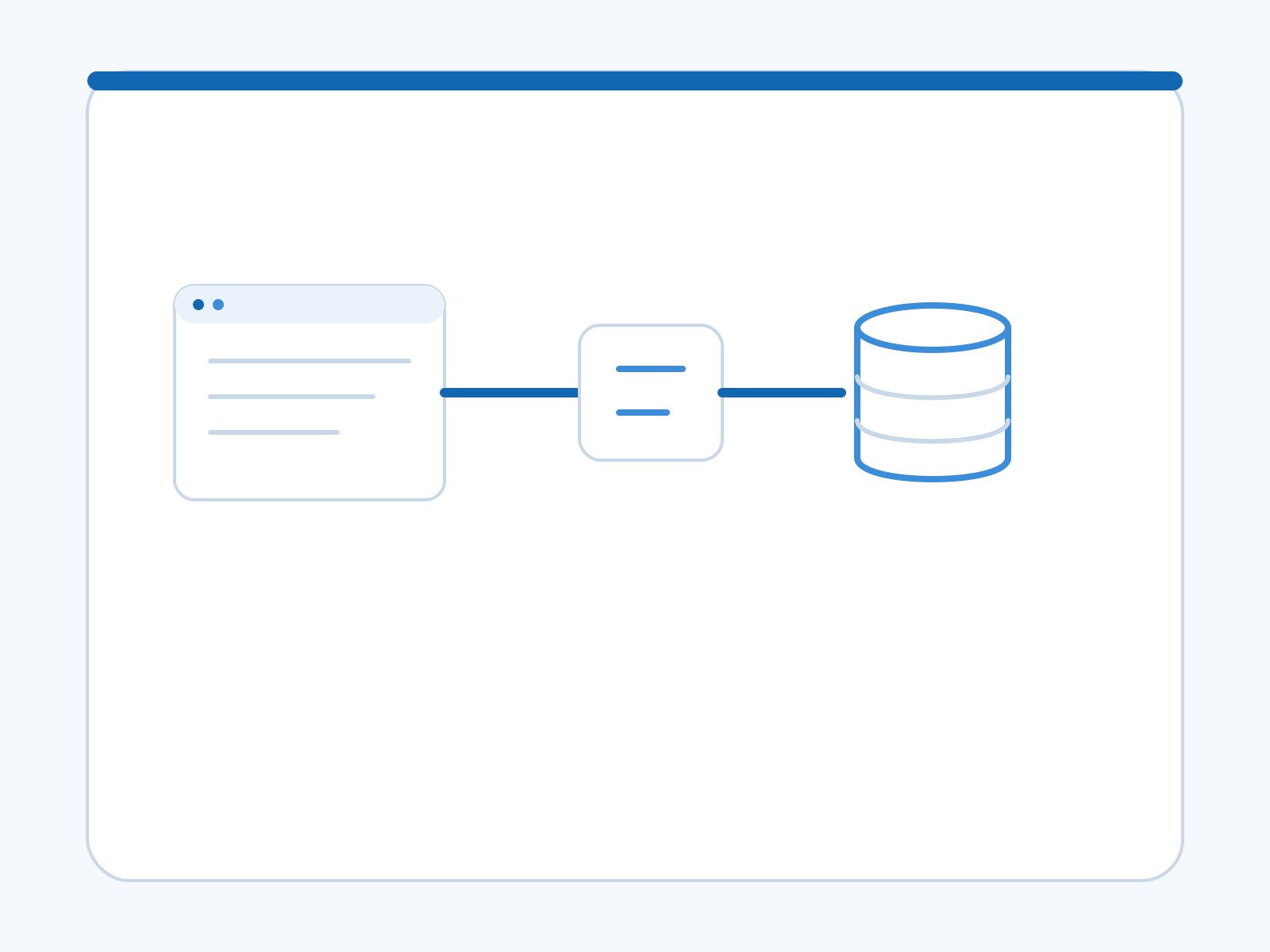
A visible error can originate in client-side logic, request construction, transport, an API gateway, backend application code, stored data or an external service. The examination therefore begins with a specific transaction rather than a general description of the architecture.
Short answer
Browser evidence can establish what the client did and what it received. It cannot by itself prove the internal code path that generated a server response; server-side attribution needs logs, code, configuration or data-state evidence.
The result should identify the supported chain and keep alternative explanations open wherever the available evidence does not distinguish them.
1. Identify the concrete transaction and system boundary
Define the user or browser event, its inputs, preconditions and timestamp. A click, form submission or navigation can provide a reproducible starting point for the evidence chain.
Map only the components necessary to explain the transaction. Architecture components that are not connected by evidence to the event should remain outside the asserted causal chain.
2. Examine frontend behaviour as its own evidence layer
Client-side code can validate input, transform data, prevent a request or issue multiple requests. Distinguish DOM events and console errors from the network requests that actually leave the browser.
Where JavaScript fails before communication, a missing API request is itself relevant evidence. Conversely, a successful request does not prove that subsequent rendering or state handling in the frontend is correct.
3. Examine HTTP API behaviour and the interface contract
Record method, target, request headers, request body, response status, response headers and response body where relevant. HTTP semantics describe the exchange but not the complete internal business logic behind it.
An OpenAPI description can document the expected interface contract for a version, but it is not evidence that a particular runtime request followed the documented implementation. Compare contract and observed exchange separately.
4. Add backend and data evidence only where available
Server logs can connect request identifiers, timestamps and processing events to the client transaction. Application code, configuration and database state may be necessary to explain why a response was generated.
Keep the evidence layers traceable. A database value observed later may not establish the value that existed at the time of the disputed request unless historical or transactional evidence supports that relationship.
5. Test competing fault-location hypotheses
A failed transaction may be explained by invalid client input, request transformation, authentication, backend validation, stale data, dependency failure or another condition. Test hypotheses against both positive and negative evidence.
When a counter-test succeeds under otherwise comparable conditions, use that difference to narrow the cause rather than to jump directly to a single component without supporting evidence.
6. Separate fault localisation from causation and responsibility
An HTTP 500 response is an observed server error state, not a complete root-cause diagnosis. Likewise a browser console error does not establish that all downstream processing would otherwise have succeeded.
The technical report can localise the strongest supported failure point and state residual uncertainty. Legal responsibility, contractual allocation and business consequence remain separate questions.
Examination checklist
- Is the concrete transaction defined with inputs and preconditions?
- Are DOM events, frontend errors and network requests distinguished?
- Are method, status, headers and response content recorded where relevant?
- Is an API specification treated as a contract rather than runtime proof?
- Are backend logs or data states used only where properly linked to the transaction?
- Have competing component-level hypotheses been tested?
- Does the conclusion distinguish fault localisation from legal responsibility?
Constructed example
A form submit creates a POST request whose payload differs from the documented API field name. The API returns a validation error and no downstream processing event appears in the server log. The examination can support a client-to-interface mismatch for that transaction without claiming that the backend is generally defect-free.
The example is entirely constructed and does not describe a real engagement, client matter or historical search result.
Sources and technical basis
- Technical primary sourceWHATWG DOM Standard. Technical primary or normative source used to delimit the relevant web-platform, HTTP or interface semantics. Open source.
- Technical primary sourceWHATWG Fetch Standard. Technical primary or normative source used to delimit the relevant web-platform, HTTP or interface semantics. Open source.
- Technical primary sourceOpenAPI Specification 3.2.1. Technical primary or normative source used to delimit the relevant web-platform, HTTP or interface semantics. Open source.
- Author's technical literatureMathias Ellmann: Von Code zu Lösungen im Software Engineering mit Java. Author's technical literature used as professional background; it does not replace the external primary or maintainer source for the proposition under examination. Open source.
- Technical primary sourceRFC 6454 — The Web Origin Concept. Technical primary or normative source used to delimit the relevant web-platform, HTTP or interface semantics. Open source.
- Technical primary sourceRFC 9110 — HTTP Semantics. Technical primary or normative source used to delimit the relevant web-platform, HTTP or interface semantics. Open source.
- Methodological basisSources & Methodology documents the source hierarchy, counter-hypothesis control and statement boundaries used across the English knowledge base.
Further reading
- Sources & Methodology
- Reproducing Web Errors Against Requirements and Actual State
- Deployment, Hosting and Production-State Reconstruction
Critical review and methodological limitation
The strength of this examination depends on whether the relevant frontend-to-backend transaction and interface evidence was identified for the correct point in time and whether the observations can be reproduced from documented inputs, system states and technical sources. A precise-looking browser trace, crawler result or performance value cannot compensate for an undefined target state or evidence collected under materially different conditions.
Alternative explanations must remain visible. The same symptom may arise from several layers of a distributed web system, and a temporal sequence does not by itself establish causation. Where server-side internals, historical states or search-engine decisions are not directly observable, the report should distinguish direct findings from reconstruction, technical plausibility and residual uncertainty.
- Identify the subject and relevant date before interpreting evidence.
- Record the client, server or search context required to reproduce the observation.
- Use the strongest source appropriate to each technical proposition.
- Test plausible alternative explanations and retain unresolved alternatives.
- State only what the method and available evidence support.
- Keep technical findings separate from legal attribution, contractual responsibility and unobserved third-party decisions.
Translation and methodological scope
This English article is based on the reviewed German V1 source article. The translation preserves the technical meaning, methodological distinctions, source status and stated limitations. It does not strengthen technical findings into legal conclusions and does not treat technical references as proof of compliance or suitability for a specific system.
Author's technical literature and publications
The following works provide additional technical and methodological context. They do not replace required primary sources, standards, manufacturer documentation or other independent specialist sources. Unpublished manuscripts, drafts and teaching materials are deliberately not presented here as public sources.

Web & Mobile Assessments
Technical examination of websites, web applications and mobile apps across concrete version, deployment, device and backend states.
Explore this assessment service