Neutral and methodically documented technical assessment of software, IT projects, data and artificial intelligence in court and legal contexts.
Technical Assessment in Court and Legal Contexts
As an independent IT expert, Mathias Ellmann examines technical questions
concerning software, IT projects, data processing, Data Science and
artificial intelligence.
A court-related assignment is accepted only after reviewing the specific
evidentiary issue or technical question, the relevant professional field,
possible conflicts of interest, available capacity and the formal scope
of the assignment.
Suitable Technical Questions
Software defects, source-code quality, software architecture and technical documentation.
Course and technical implementation of IT projects, requirements and acceptance evidence.
Data quality, data processing, statistical analysis and Data Science methods.
Machine-learning and AI systems, model validity, reproducibility, bias and technical traceability.
Technical evidence preservation, documentation quality and reproducibility of examination results.
Professional boundary:
The work concerns technical and methodological assessment.
Legal evaluation and legal advice are not provided.
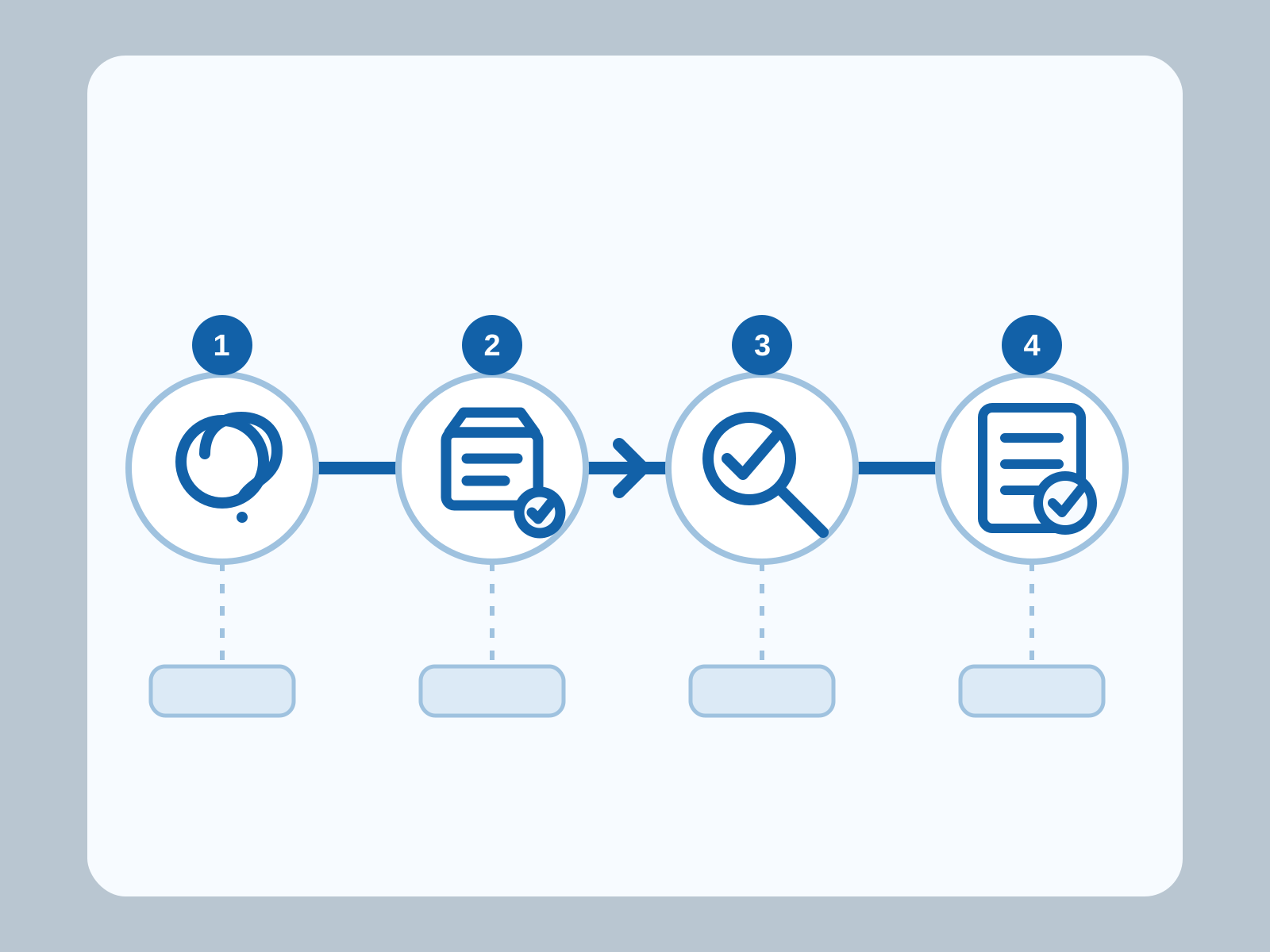
3
Perform the technical analysis
Examine integrity, evidence chains, methods, reference criteria and plausible alternative explanations.
4
Findings and expert report
Document findings, professional conclusions, reproducibility, uncertainty and statement boundaries.
The process graphic links directly to the corresponding detailed examination methods in the English knowledge base.
1. Evidentiary Issue and Technical Question
The starting point is the concrete evidentiary issue or technical question.
It is first checked for clarity, technical examinability and fit with the
expert's professional field.
2. Professional Field, Conflict of Interest and Capacity
Before accepting an assignment, professional responsibility, potential
conflicts of interest, required examination resources and the intended
timeframe are reviewed.
3. Records and Examination Basis
Depending on the question, relevant evidence can include contracts and
technical service descriptions, requirements specifications, source code,
repository and release states, logs, datasets, model artefacts, test reports
and existing expert reports.
4. Technical Analysis
Examination methods, reference criteria, data sources and assumptions are
documented. Technical findings are separated from professional inference,
and uncertainty or limitations of the available evidence are stated explicitly.
5. Traceable Expert Report
The report connects the technical question, evidence basis, methodology,
findings and conclusions so that the reasoning can be independently reviewed
and, where technically possible, reproduced using the same evidence and
environment.
Neutrality and Professional Independence
Technical expert assessments are based on documented facts, traceable
examination criteria and a transparent methodology. Assignments involving
an identifiable unresolved conflict of interest are not accepted.
In court-related matters, the separation between technical finding,
professional conclusion and legal evaluation is particularly important.
Legal assessment and judicial evaluation of evidence remain with the court
and the appropriately authorised legal professionals.
The knowledge base explains typical technical examination questions,
required records, version references, examination methods and statement
boundaries in a traceable form.
How a broad dispute can be separated into technically examinable questions.
Further Specialist Articles
The following specialist contribution deepens questions concerning
responsible technology design, artificial intelligence and traceable
technical decisions.
Responsible Artificial Intelligence
The article discusses opportunities and challenges of artificial intelligence
and places technical decisions in the context of transparency, responsibility
and human judgement.
Read the specialist article
.
Recommended Technical Books
These books deepen selected methods, reasoning patterns and technical foundations
relevant to this assessment area. They do not replace an individual technical
examination or expert assessment.
English edition
Critical Thinking in Data Science with Python
From Observation to Responsible Decision-Making
The book combines Data Science, statistics, reasoning, model evaluation, fairness and human responsibility with practical Python work.
From Data to Solutions in Data Science with Python
From Problem Definition to Responsible Solutions
The book treats Data Science as a systematic problem-solving process from problem definition and data quality to modelling, deployment and responsible solutions.
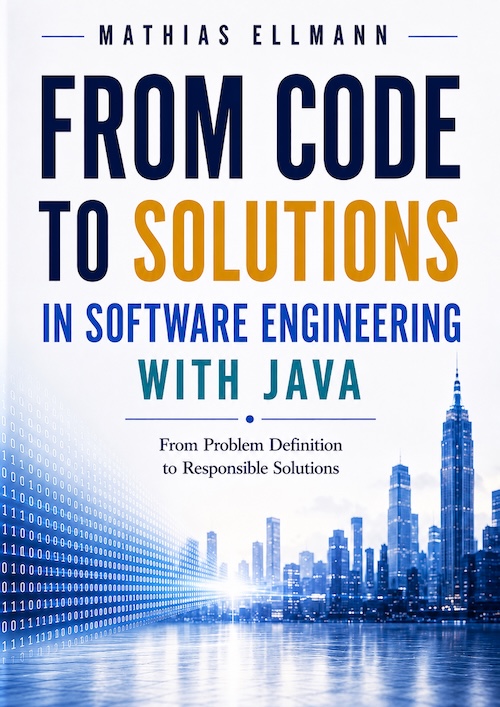
From Code to Solutions in Software Engineering with Java
From Problem Definition to Responsible Solutions
The book presents software engineering as structured problem solving across requirements, architecture, implementation, quality, operation and responsibility.
Further information about the books and purchasing options is available at
www.mathiasellmann.de.
Initial Professional Review of an Enquiry
For an initial review, it is useful to provide the evidentiary issue or
technical question, a concise description of the technical facts, an
overview of the available records and the desired timeframe.
On that basis, it can be assessed whether the matter falls within the
relevant professional field, which records would be required for a technical
examination and whether the work appears feasible within the intended period.
Technical questions concerning software, IT projects, data, Data Science and AI can be examined where they fall within the expert field and can be addressed using suitable technical methods.
How does the review of a court enquiry begin?
The evidentiary question and available records are reviewed first, followed by checks of technical scope, conflicts of interest, examinability and capacity.
How is neutrality supported?
The assessment is based on documented technical facts and disclosed criteria. Assignments involving an identifiable conflict of interest are not accepted.
Does the work include legal evaluation?
No. The expert work addresses technical and methodological assessment. Legal evaluation and legal advice remain separate.