Technical SEO
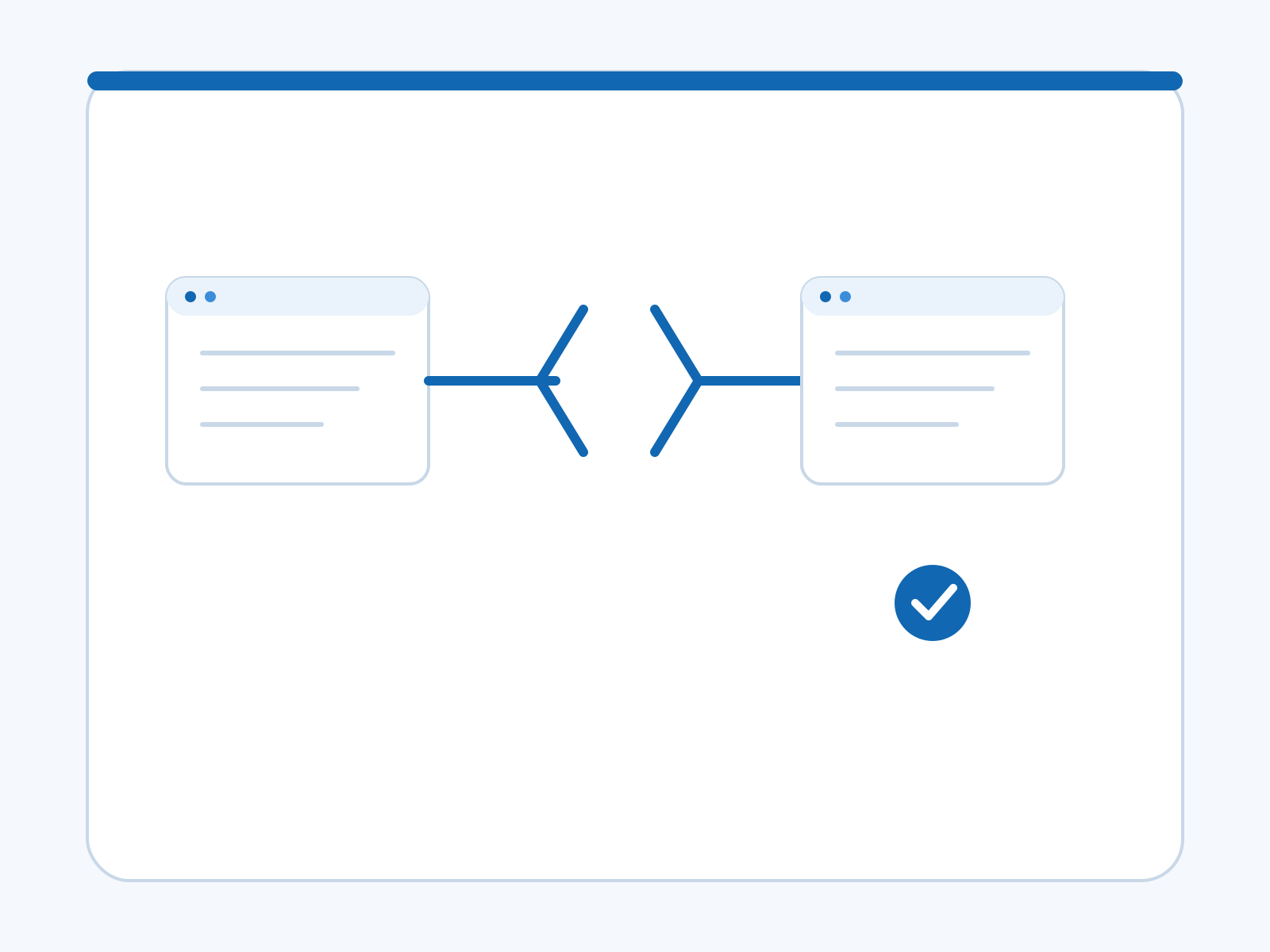
JavaScript can materially change what a browser displays after the initial HTML response. A technical examination therefore distinguishes server-delivered content from the rendered DOM and records the requests and resources required to reach that state.
Short answer
A headless-browser reproduction can demonstrate a technical render path under the tested conditions. It is not complete proof of how a search provider rendered or indexed the same URL at another time.
The conclusion should separate renderability, crawl access, indexing directives and actual indexing outcomes rather than using “JavaScript SEO” as one undifferentiated cause.
1. Capture initial server response and document state
Preserve the initial HTML response, relevant headers and status before executing application JavaScript. This establishes which content and directives were server-delivered and which only appear later.
Record redirects and resource references because the initial response can already explain missing content, blocked scripts or a different application entry point.
2. Observe JavaScript execution and the resulting DOM
Run the page in a defined browser context and record JavaScript errors, DOM changes and the point at which relevant content becomes available. Dynamic content can depend on timers, user state or asynchronous data.
Treat rendered DOM as a separate evidence state from source HTML. The presence of content after execution does not mean it was present in the initial response.
3. Trace data requests and resource dependencies
Capture fetch or API requests that populate the page, including failed requests and relevant response statuses. Scripts, APIs or other resources that cannot be retrieved can prevent the expected rendered state.
Where cross-origin requests are involved, include the origin and request context necessary to understand the observed browser behaviour.
4. Distinguish browser reproduction from search processing
A local or automated browser demonstrates what that browser produced under controlled conditions. Google documents crawling and rendering as processing stages, but local reproduction does not establish the exact historical Google render.
Where provider tools or observations are available, treat them as separate evidence and record their date, scope and limitations rather than assuming equivalence with the local browser.
5. Compare server and rendered states concretely
Identify which relevant text, links, metadata or directives differ between the initial response and rendered document. Avoid generic statements that a site “uses JavaScript” without connecting the execution path to the item under examination.
Controlled comparison can also test whether important content remains available when a data request fails or when a script resource is unavailable.
6. Limit conclusions about indexability and actual indexation
Successful rendering under the test conditions does not guarantee indexation or ranking. It establishes that the tested render path can produce the content when its dependencies are available.
Likewise, a failed render can be a technically plausible contributor to search-processing problems without proving the complete reason for a historical indexing outcome.
Examination checklist
- Is initial HTML preserved before JavaScript execution?
- Are JavaScript errors and rendered DOM state captured?
- Are dependent fetch/API requests and resource failures recorded?
- Is the browser and execution context reproducible?
- Is local rendering distinguished from provider-side rendering?
- Are robots and indexing directives checked as separate mechanisms?
- Is renderability kept separate from actual indexation or ranking?
Constructed example
A product description is absent from initial HTML and appears only after a successful API request. The test can reproduce and document that render path. Whether the provider rendered and indexed the same content during an earlier period requires provider-specific or historical evidence.
The example is entirely constructed and does not describe a real engagement, client matter or historical search result.
Sources and technical basis
- Technical maintainer sourceGoogle Search — Fix Search-related JavaScript problems. Maintainer documentation used for the externally documented search or performance behaviour; it is not treated as proof of a specific historical ranking decision. Open source.
- Technical maintainer sourceGoogle Search — JavaScript SEO basics. Maintainer documentation used for the externally documented search or performance behaviour; it is not treated as proof of a specific historical ranking decision. Open source.
- Technical maintainer sourceGoogle Search — Robots meta tag and X-Robots-Tag. Maintainer documentation used for the externally documented search or performance behaviour; it is not treated as proof of a specific historical ranking decision. Open source.
- Technical maintainer sourceGoogle Search — Technical requirements. Maintainer documentation used for the externally documented search or performance behaviour; it is not treated as proof of a specific historical ranking decision. Open source.
- Technical maintainer sourceGoogle Search — How Search Works. Maintainer documentation used for the externally documented search or performance behaviour; it is not treated as proof of a specific historical ranking decision. Open source.
- Methodological basisSources & Methodology documents the source hierarchy, counter-hypothesis control and statement boundaries used across the English knowledge base.
Further reading
- Sources & Methodology
- Technical SEO as a Subject of Examination
- Crawling, Indexing, Robots and Sitemaps
Critical review and methodological limitation
The strength of this examination depends on whether the relevant initial HTML, JavaScript execution and rendered search-facing content was identified for the correct point in time and whether the observations can be reproduced from documented inputs, system states and technical sources. A precise-looking browser trace, crawler result or performance value cannot compensate for an undefined target state or evidence collected under materially different conditions.
Alternative explanations must remain visible. The same symptom may arise from several layers of a distributed web system, and a temporal sequence does not by itself establish causation. Where server-side internals, historical states or search-engine decisions are not directly observable, the report should distinguish direct findings from reconstruction, technical plausibility and residual uncertainty.
- Identify the subject and relevant date before interpreting evidence.
- Record the client, server or search context required to reproduce the observation.
- Use the strongest source appropriate to each technical proposition.
- Test plausible alternative explanations and retain unresolved alternatives.
- State only what the method and available evidence support.
- Keep technical findings separate from legal attribution, contractual responsibility and unobserved third-party decisions.
Translation and methodological scope
This English article is based on the reviewed German V1 source article. The translation preserves the technical meaning, methodological distinctions, source status and stated limitations. It does not strengthen technical findings into legal conclusions and does not treat technical references as proof of compliance or suitability for a specific system.
Author's technical literature and publications
The following works provide additional technical and methodological context. They do not replace required primary sources, standards, manufacturer documentation or other independent specialist sources. Unpublished manuscripts, drafts and teaching materials are deliberately not presented here as public sources.

Technical SEO Assessment
Reproducible examination of crawlability, indexability, redirects, canonical signals, rendering, performance and technical change history.
Explore this assessment service